
Home
a Narrow Grave: Essays on Texas
Barnes and Noble
Loading Inventory...
a Narrow Grave: Essays on Texas
Current price: $16.95
Barnes and Noble
a Narrow Grave: Essays on Texas
Current price: $16.95
Loading Inventory...
Size: Paperback
*Product information may vary - to confirm product availability, pricing, shipping and return information please contact Barnes and Noble
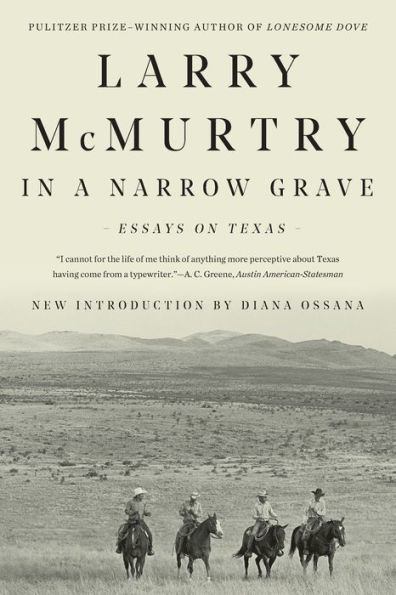
This landmark collection, brimming with his signature wit and incomparable sensibility, is Larry McMurtry’s classic tribute to his home and his people.
Before embarking on what would become one of the most prominent writing careers in American literature, spanning decades and indelibly shaping the nation’s perception of the West, Larry McMurtry knew what it meant to come from Texas. Originally published in 1968,
In a Narrow Grave
is the Pulitzer Prize–winning author’s homage to the past and present of the Lone Star State, where he grew up a precociously observant hand on his father’s ranch. From literature to rodeos, small-town folk to big city intellectuals, McMurtry explores all the singular elements that define his land and community, revealing the surprising and particular challenges in the “dying . . . rural, pastoral way of life.” “The gold standard for understanding Houston’s brash rootlessness and civic insecurities” (Douglas Brinkley,
New York Times Book Review
),
offers a timeless portrait of the vividly human, complex, full-blooded Texan.
Before embarking on what would become one of the most prominent writing careers in American literature, spanning decades and indelibly shaping the nation’s perception of the West, Larry McMurtry knew what it meant to come from Texas. Originally published in 1968,
In a Narrow Grave
is the Pulitzer Prize–winning author’s homage to the past and present of the Lone Star State, where he grew up a precociously observant hand on his father’s ranch. From literature to rodeos, small-town folk to big city intellectuals, McMurtry explores all the singular elements that define his land and community, revealing the surprising and particular challenges in the “dying . . . rural, pastoral way of life.” “The gold standard for understanding Houston’s brash rootlessness and civic insecurities” (Douglas Brinkley,
New York Times Book Review
),
offers a timeless portrait of the vividly human, complex, full-blooded Texan.
This landmark collection, brimming with his signature wit and incomparable sensibility, is Larry McMurtry’s classic tribute to his home and his people.
Before embarking on what would become one of the most prominent writing careers in American literature, spanning decades and indelibly shaping the nation’s perception of the West, Larry McMurtry knew what it meant to come from Texas. Originally published in 1968,
In a Narrow Grave
is the Pulitzer Prize–winning author’s homage to the past and present of the Lone Star State, where he grew up a precociously observant hand on his father’s ranch. From literature to rodeos, small-town folk to big city intellectuals, McMurtry explores all the singular elements that define his land and community, revealing the surprising and particular challenges in the “dying . . . rural, pastoral way of life.” “The gold standard for understanding Houston’s brash rootlessness and civic insecurities” (Douglas Brinkley,
New York Times Book Review
),
offers a timeless portrait of the vividly human, complex, full-blooded Texan.
Before embarking on what would become one of the most prominent writing careers in American literature, spanning decades and indelibly shaping the nation’s perception of the West, Larry McMurtry knew what it meant to come from Texas. Originally published in 1968,
In a Narrow Grave
is the Pulitzer Prize–winning author’s homage to the past and present of the Lone Star State, where he grew up a precociously observant hand on his father’s ranch. From literature to rodeos, small-town folk to big city intellectuals, McMurtry explores all the singular elements that define his land and community, revealing the surprising and particular challenges in the “dying . . . rural, pastoral way of life.” “The gold standard for understanding Houston’s brash rootlessness and civic insecurities” (Douglas Brinkley,
New York Times Book Review
),
offers a timeless portrait of the vividly human, complex, full-blooded Texan.
You May Also Like











More About Barnes and Noble at The Summit
With an excellent depth of book selection, competitive discounting of bestsellers, and comfortable settings, Barnes & Noble is an excellent place to browse for your next book.
Store Info
Find Barnes and Noble at The Summit in Birmingham, AL
Visit Barnes and Noble at The Summit in Birmingham, AL