
Home
Black Boy
Barnes and Noble
Loading Inventory...
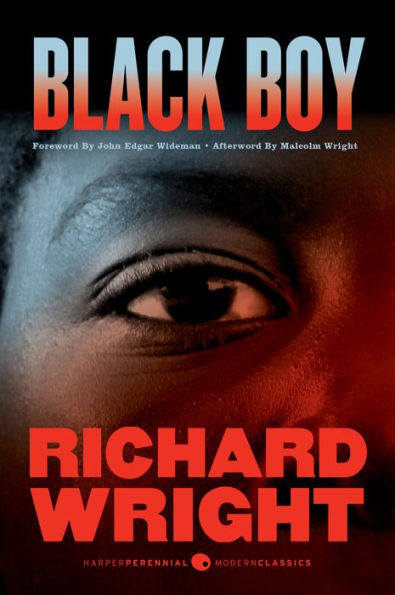
Black Boy
Current price: $39.99
Barnes and Noble
Black Boy
Current price: $39.99
Loading Inventory...
Size: Audio MP3 on CD
*Product information may vary - to confirm product availability, pricing, shipping and return information please contact Barnes and Noble
A special 75th anniversary edition of Richard Wright's powerful and unforgettable memoir, with a new foreword by John Edgar Wideman and an afterword by Malcolm Wright, the author’s grandson.
When it exploded onto the literary scene in 1945,
Black Boy
was both praised and condemned. Orville Prescott of the
New York Times
wrote that “if enough such books are written, if enough millions of people read them maybe, someday, in the fullness of time, there will be a greater understanding and a more true democracy.” Yet from 1975 to 1978,
was banned in schools throughout the United States for “obscenity” and “instigating hatred between the races.”
Wright’s once controversial, now celebrated autobiography measures the raw brutality of the Jim Crow South against the sheer desperate will it took to survive as a Black boy. Enduring poverty, hunger, fear, abuse, and hatred while growing up in the woods of Mississippi, Wright lied, stole, and raged at those around him—whites indifferent, pitying, or cruel and Blacks resentful of anyone trying to rise above their circumstances. Desperate for a different way of life, he headed north, eventually arriving in Chicago, where he forged a new path and began his career as a writer. At the end of
, Wright sits poised with pencil in hand, determined to “hurl words into this darkness and wait for an echo.” Seventy-five years later, his words continue to reverberate. “To read
is to stare into the heart of darkness,” John Edgar Wideman writes in his foreword. “Not the dark heart Conrad searched for in Congo jungles but the beating heart I bear.”
One of the great American memoirs, Wright’s account is a poignant record of struggle and endurance—a seminal literary work that illuminates our own time.
When it exploded onto the literary scene in 1945,
Black Boy
was both praised and condemned. Orville Prescott of the
New York Times
wrote that “if enough such books are written, if enough millions of people read them maybe, someday, in the fullness of time, there will be a greater understanding and a more true democracy.” Yet from 1975 to 1978,
was banned in schools throughout the United States for “obscenity” and “instigating hatred between the races.”
Wright’s once controversial, now celebrated autobiography measures the raw brutality of the Jim Crow South against the sheer desperate will it took to survive as a Black boy. Enduring poverty, hunger, fear, abuse, and hatred while growing up in the woods of Mississippi, Wright lied, stole, and raged at those around him—whites indifferent, pitying, or cruel and Blacks resentful of anyone trying to rise above their circumstances. Desperate for a different way of life, he headed north, eventually arriving in Chicago, where he forged a new path and began his career as a writer. At the end of
, Wright sits poised with pencil in hand, determined to “hurl words into this darkness and wait for an echo.” Seventy-five years later, his words continue to reverberate. “To read
is to stare into the heart of darkness,” John Edgar Wideman writes in his foreword. “Not the dark heart Conrad searched for in Congo jungles but the beating heart I bear.”
One of the great American memoirs, Wright’s account is a poignant record of struggle and endurance—a seminal literary work that illuminates our own time.
A special 75th anniversary edition of Richard Wright's powerful and unforgettable memoir, with a new foreword by John Edgar Wideman and an afterword by Malcolm Wright, the author’s grandson.
When it exploded onto the literary scene in 1945,
Black Boy
was both praised and condemned. Orville Prescott of the
New York Times
wrote that “if enough such books are written, if enough millions of people read them maybe, someday, in the fullness of time, there will be a greater understanding and a more true democracy.” Yet from 1975 to 1978,
was banned in schools throughout the United States for “obscenity” and “instigating hatred between the races.”
Wright’s once controversial, now celebrated autobiography measures the raw brutality of the Jim Crow South against the sheer desperate will it took to survive as a Black boy. Enduring poverty, hunger, fear, abuse, and hatred while growing up in the woods of Mississippi, Wright lied, stole, and raged at those around him—whites indifferent, pitying, or cruel and Blacks resentful of anyone trying to rise above their circumstances. Desperate for a different way of life, he headed north, eventually arriving in Chicago, where he forged a new path and began his career as a writer. At the end of
, Wright sits poised with pencil in hand, determined to “hurl words into this darkness and wait for an echo.” Seventy-five years later, his words continue to reverberate. “To read
is to stare into the heart of darkness,” John Edgar Wideman writes in his foreword. “Not the dark heart Conrad searched for in Congo jungles but the beating heart I bear.”
One of the great American memoirs, Wright’s account is a poignant record of struggle and endurance—a seminal literary work that illuminates our own time.
When it exploded onto the literary scene in 1945,
Black Boy
was both praised and condemned. Orville Prescott of the
New York Times
wrote that “if enough such books are written, if enough millions of people read them maybe, someday, in the fullness of time, there will be a greater understanding and a more true democracy.” Yet from 1975 to 1978,
was banned in schools throughout the United States for “obscenity” and “instigating hatred between the races.”
Wright’s once controversial, now celebrated autobiography measures the raw brutality of the Jim Crow South against the sheer desperate will it took to survive as a Black boy. Enduring poverty, hunger, fear, abuse, and hatred while growing up in the woods of Mississippi, Wright lied, stole, and raged at those around him—whites indifferent, pitying, or cruel and Blacks resentful of anyone trying to rise above their circumstances. Desperate for a different way of life, he headed north, eventually arriving in Chicago, where he forged a new path and began his career as a writer. At the end of
, Wright sits poised with pencil in hand, determined to “hurl words into this darkness and wait for an echo.” Seventy-five years later, his words continue to reverberate. “To read
is to stare into the heart of darkness,” John Edgar Wideman writes in his foreword. “Not the dark heart Conrad searched for in Congo jungles but the beating heart I bear.”
One of the great American memoirs, Wright’s account is a poignant record of struggle and endurance—a seminal literary work that illuminates our own time.
You May Also Like
![About A Woman [Black Ice Vinyl] [Barnes & Noble Exclusive]](https://prodimage.images-bn.com/pimages/0843930112449_p0_v1_s600x595.jpg)
![Jersey Boys [Original Broadway Cast Recording] [Barnes & Noble Exclusive]](https://prodimage.images-bn.com/pimages/0603497829637_p0_v2_s600x595.jpg)
![Silver Bleeds the Black Sun [Alternate Cover Art] [Barnes & Noble Exclusive]](https://prodimage.images-bn.com/pimages/0199438000918_p0_v2_s600x595.jpg)
![Native American [Fire Orange with Black Swirl Vinyl] [Barnes & Noble Exclusive]](https://prodimage.images-bn.com/pimages/0848064017301_p0_v2_s600x595.jpg)
![Carrie & Lowell [Translucent Black Ice Vinyl] [Barnes Noble Exclusive]](https://prodimage.images-bn.com/pimages/0729920166275_p0_v3_s600x595.jpg)
![Living Room [140g LP Red with Black & White Swirl Vinyl] [Barnes Noble Exclusive]](https://prodimage.images-bn.com/pimages/4099964184037_p0_v1_s600x595.jpg)
![World Music Radio [Transparent Black Ice Vinyl] [Barnes & Noble Exclusive]](https://prodimage.images-bn.com/pimages/0602455822956_p0_v1_s600x595.jpg)







More About Barnes and Noble at The Summit
With an excellent depth of book selection, competitive discounting of bestsellers, and comfortable settings, Barnes & Noble is an excellent place to browse for your next book.
Store Info
Find Barnes and Noble at The Summit in Birmingham, AL
Visit Barnes and Noble at The Summit in Birmingham, AL