
Home
Culinary Reactions: The Everyday Chemistry of Cooking
Barnes and Noble
Loading Inventory...
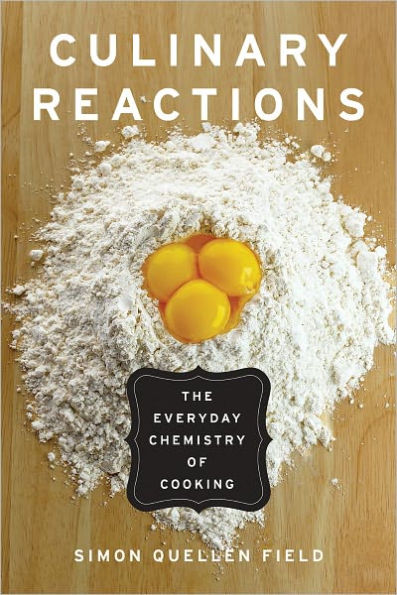
Culinary Reactions: The Everyday Chemistry of Cooking
Current price: $11.99
Barnes and Noble
Culinary Reactions: The Everyday Chemistry of Cooking
Current price: $11.99
Loading Inventory...
Size: Audiobook
*Product information may vary - to confirm product availability, pricing, shipping and return information please contact Barnes and Noble
When you're cooking, you're a chemist!
Every time you follow or modify a recipe, you are experimenting with acids and bases, emulsions and suspensions, gels and foams. In your kitchen you denature proteins, crystallize compounds, react enzymes with substrates, and nurture desired microbial life while suppressing harmful bacteria and fungi. And unlike in a laboratory, you can eat your experiments to verify your hypotheses.
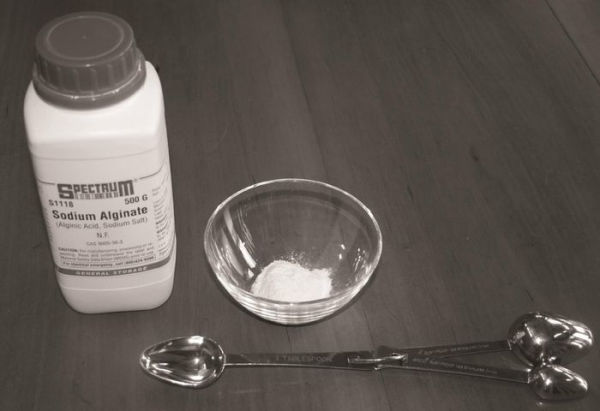
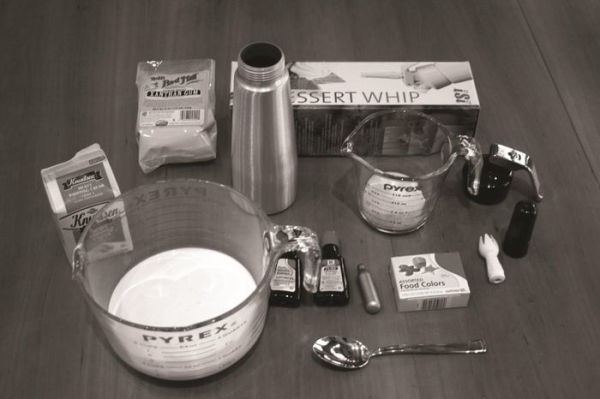
In Culinary Reactions, author Simon Quellen Field turns measuring cups, stovetop burners, and mixing bowls into graduated cylinders, Bunsen burners, and beakers. How does altering the ratio of flour, sugar, yeast, salt, butter, and water affect how high bread rises? Why is whipped cream made with nitrous oxide rather than the more common carbon dioxide? And why does Hollandaise sauce call for "clarified" butter? This easy-to-follow primer even includes recipes to demonstrate the concepts being discussed, including: Whipped Creamsicle Topping—a foam; Cherry Dream Cheese—a protein gle; Lemonade with Chameleon Eggs—an acid indicator; and more!
Every time you follow or modify a recipe, you are experimenting with acids and bases, emulsions and suspensions, gels and foams. In your kitchen you denature proteins, crystallize compounds, react enzymes with substrates, and nurture desired microbial life while suppressing harmful bacteria and fungi. And unlike in a laboratory, you can eat your experiments to verify your hypotheses.
In Culinary Reactions, author Simon Quellen Field turns measuring cups, stovetop burners, and mixing bowls into graduated cylinders, Bunsen burners, and beakers. How does altering the ratio of flour, sugar, yeast, salt, butter, and water affect how high bread rises? Why is whipped cream made with nitrous oxide rather than the more common carbon dioxide? And why does Hollandaise sauce call for "clarified" butter? This easy-to-follow primer even includes recipes to demonstrate the concepts being discussed, including: Whipped Creamsicle Topping—a foam; Cherry Dream Cheese—a protein gle; Lemonade with Chameleon Eggs—an acid indicator; and more!
When you're cooking, you're a chemist!
Every time you follow or modify a recipe, you are experimenting with acids and bases, emulsions and suspensions, gels and foams. In your kitchen you denature proteins, crystallize compounds, react enzymes with substrates, and nurture desired microbial life while suppressing harmful bacteria and fungi. And unlike in a laboratory, you can eat your experiments to verify your hypotheses.
In Culinary Reactions, author Simon Quellen Field turns measuring cups, stovetop burners, and mixing bowls into graduated cylinders, Bunsen burners, and beakers. How does altering the ratio of flour, sugar, yeast, salt, butter, and water affect how high bread rises? Why is whipped cream made with nitrous oxide rather than the more common carbon dioxide? And why does Hollandaise sauce call for "clarified" butter? This easy-to-follow primer even includes recipes to demonstrate the concepts being discussed, including: Whipped Creamsicle Topping—a foam; Cherry Dream Cheese—a protein gle; Lemonade with Chameleon Eggs—an acid indicator; and more!
Every time you follow or modify a recipe, you are experimenting with acids and bases, emulsions and suspensions, gels and foams. In your kitchen you denature proteins, crystallize compounds, react enzymes with substrates, and nurture desired microbial life while suppressing harmful bacteria and fungi. And unlike in a laboratory, you can eat your experiments to verify your hypotheses.
In Culinary Reactions, author Simon Quellen Field turns measuring cups, stovetop burners, and mixing bowls into graduated cylinders, Bunsen burners, and beakers. How does altering the ratio of flour, sugar, yeast, salt, butter, and water affect how high bread rises? Why is whipped cream made with nitrous oxide rather than the more common carbon dioxide? And why does Hollandaise sauce call for "clarified" butter? This easy-to-follow primer even includes recipes to demonstrate the concepts being discussed, including: Whipped Creamsicle Topping—a foam; Cherry Dream Cheese—a protein gle; Lemonade with Chameleon Eggs—an acid indicator; and more!
You May Also Like


![Something Delicious: 100 Recipes for Everyday Cooking [A Cookbook]](https://prodimage.images-bn.com/pimages/9780593835456_p0_v1_s600x595.jpg)

![My Everyday Lagos: Nigerian Cooking at Home and the Diaspora [A Cookbook]](https://prodimage.images-bn.com/pimages/9781984858931_p0_v1_s600x595.jpg)









More About Barnes and Noble at The Summit
With an excellent depth of book selection, competitive discounting of bestsellers, and comfortable settings, Barnes & Noble is an excellent place to browse for your next book.
Store Info
Find Barnes and Noble at The Summit in Birmingham, AL
Visit Barnes and Noble at The Summit in Birmingham, AL