
Home
Sick and Dirty: Hollywood's Gay Golden Age the Making of Modern Queerness
Barnes and Noble
Loading Inventory...
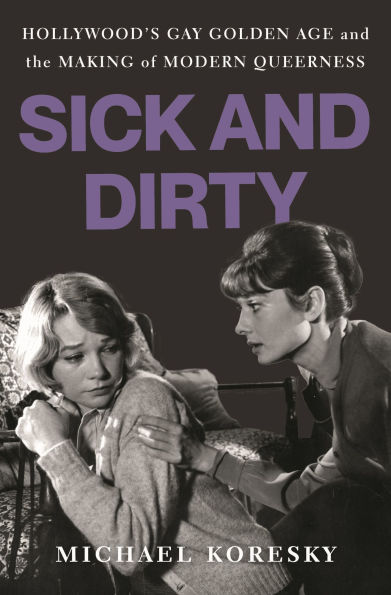
Sick and Dirty: Hollywood's Gay Golden Age the Making of Modern Queerness
Current price: $29.99
Barnes and Noble
Sick and Dirty: Hollywood's Gay Golden Age the Making of Modern Queerness
Current price: $29.99
Loading Inventory...
Size: Hardcover
*Product information may vary - to confirm product availability, pricing, shipping and return information please contact Barnes and Noble
AN ALLSTORA'S QUEER HISTORY 101 BOOK CLUB PICK
A blazingly original history celebrating the persistence of queerness onscreen, behind the camera, and between the lines during the dark days of the Hollywood Production Code.
From the 1930s to the 1960s, the Motion Picture Production Code severely restricted what Hollywood cinema could depict. This included “any inference” of the lives of homosexuals. In a landmark 1981 book, gay activist Vito Russo famously condemned Hollywood's censorship regime, lambasting many midcentury films as the bigoted products of a “celluloid closet.”
But there is more to these movies than meets the eye. In this insightful, wildly entertaining book, cinema historian Michael Koresky finds new meaning in "problematic” classics of the Code era like Hitchcock's
Rope
, Minnelli's
Tea and Sympathy
, and-bookending the period and anchoring Koresky's narrative-William Wyler's two adaptations of
The Children's Hour
, Lillian Hellman's provocative hit play about a pair of schoolteachers accused of lesbianism.
Lifting up the underappreciated queer filmmakers, writers, and actors of the era, Koresky finds artists who are long overdue for reevaluation. Through his brilliant inquiry,
Sick and Dirty
reveals the “bad seeds” of queer cinema to be surprisingly, even gleefully subversive, reminding us, in an age of book bans and gag laws, that nothing makes queerness speak louder than its opponents' bids to silence it.
A blazingly original history celebrating the persistence of queerness onscreen, behind the camera, and between the lines during the dark days of the Hollywood Production Code.
From the 1930s to the 1960s, the Motion Picture Production Code severely restricted what Hollywood cinema could depict. This included “any inference” of the lives of homosexuals. In a landmark 1981 book, gay activist Vito Russo famously condemned Hollywood's censorship regime, lambasting many midcentury films as the bigoted products of a “celluloid closet.”
But there is more to these movies than meets the eye. In this insightful, wildly entertaining book, cinema historian Michael Koresky finds new meaning in "problematic” classics of the Code era like Hitchcock's
Rope
, Minnelli's
Tea and Sympathy
, and-bookending the period and anchoring Koresky's narrative-William Wyler's two adaptations of
The Children's Hour
, Lillian Hellman's provocative hit play about a pair of schoolteachers accused of lesbianism.
Lifting up the underappreciated queer filmmakers, writers, and actors of the era, Koresky finds artists who are long overdue for reevaluation. Through his brilliant inquiry,
Sick and Dirty
reveals the “bad seeds” of queer cinema to be surprisingly, even gleefully subversive, reminding us, in an age of book bans and gag laws, that nothing makes queerness speak louder than its opponents' bids to silence it.
AN ALLSTORA'S QUEER HISTORY 101 BOOK CLUB PICK
A blazingly original history celebrating the persistence of queerness onscreen, behind the camera, and between the lines during the dark days of the Hollywood Production Code.
From the 1930s to the 1960s, the Motion Picture Production Code severely restricted what Hollywood cinema could depict. This included “any inference” of the lives of homosexuals. In a landmark 1981 book, gay activist Vito Russo famously condemned Hollywood's censorship regime, lambasting many midcentury films as the bigoted products of a “celluloid closet.”
But there is more to these movies than meets the eye. In this insightful, wildly entertaining book, cinema historian Michael Koresky finds new meaning in "problematic” classics of the Code era like Hitchcock's
Rope
, Minnelli's
Tea and Sympathy
, and-bookending the period and anchoring Koresky's narrative-William Wyler's two adaptations of
The Children's Hour
, Lillian Hellman's provocative hit play about a pair of schoolteachers accused of lesbianism.
Lifting up the underappreciated queer filmmakers, writers, and actors of the era, Koresky finds artists who are long overdue for reevaluation. Through his brilliant inquiry,
Sick and Dirty
reveals the “bad seeds” of queer cinema to be surprisingly, even gleefully subversive, reminding us, in an age of book bans and gag laws, that nothing makes queerness speak louder than its opponents' bids to silence it.
A blazingly original history celebrating the persistence of queerness onscreen, behind the camera, and between the lines during the dark days of the Hollywood Production Code.
From the 1930s to the 1960s, the Motion Picture Production Code severely restricted what Hollywood cinema could depict. This included “any inference” of the lives of homosexuals. In a landmark 1981 book, gay activist Vito Russo famously condemned Hollywood's censorship regime, lambasting many midcentury films as the bigoted products of a “celluloid closet.”
But there is more to these movies than meets the eye. In this insightful, wildly entertaining book, cinema historian Michael Koresky finds new meaning in "problematic” classics of the Code era like Hitchcock's
Rope
, Minnelli's
Tea and Sympathy
, and-bookending the period and anchoring Koresky's narrative-William Wyler's two adaptations of
The Children's Hour
, Lillian Hellman's provocative hit play about a pair of schoolteachers accused of lesbianism.
Lifting up the underappreciated queer filmmakers, writers, and actors of the era, Koresky finds artists who are long overdue for reevaluation. Through his brilliant inquiry,
Sick and Dirty
reveals the “bad seeds” of queer cinema to be surprisingly, even gleefully subversive, reminding us, in an age of book bans and gag laws, that nothing makes queerness speak louder than its opponents' bids to silence it.
You May Also Like









More About Barnes and Noble at The Summit
With an excellent depth of book selection, competitive discounting of bestsellers, and comfortable settings, Barnes & Noble is an excellent place to browse for your next book.
Store Info
Find Barnes and Noble at The Summit in Birmingham, AL
Visit Barnes and Noble at The Summit in Birmingham, AL